Future Fitness 2026: Tech, Recovery & Community
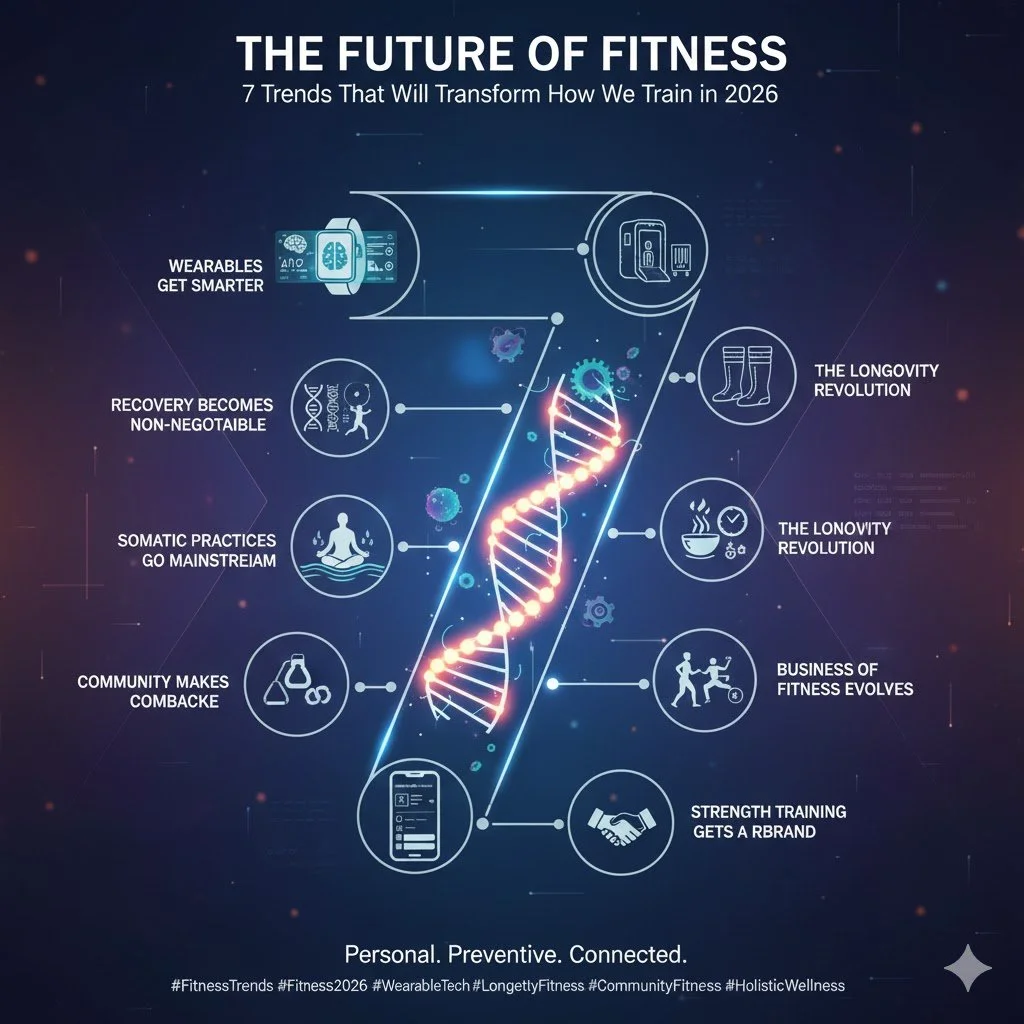
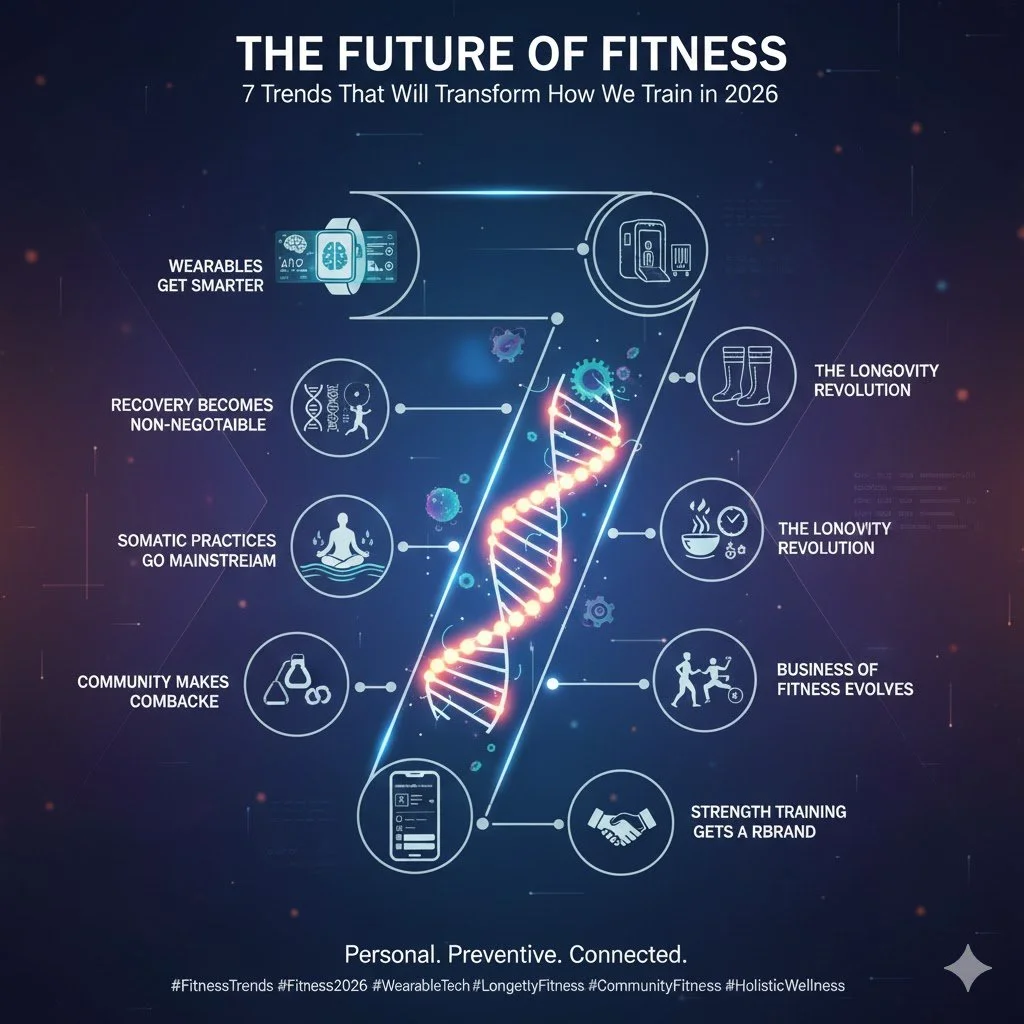
The Future of Fitness: 7 Trends That Will Transform How We Train in 2026
Something fundamental is shifting in the fitness industry. It's no longer just about burning calories or building muscle—it's about living longer, feeling better, and actually enjoying the process.
As we look toward 2026, the American College of Sports Medicine's annual worldwide trends report and insights from industry leaders paint a compelling picture of where fitness is headed. And honestly? It's more exciting than ever.
The global fitness industry is projected to reach $110 billion, but the real story isn't in the numbers—it's in how we're redefining what it means to be fit.
Let's dive into the seven trends reshaping the future of fitness.
---
1. Wearables Get Smarter (And Finally Useful)
For the 11th consecutive year, wearable technology tops the ACSM's global fitness trends. But here's the shift: nearly half of American adults now own a wearable device, so the conversation has moved beyond owning one to actually using it effectively.
In 2026, expect your smartwatch to do more than count steps. We're talking real-time AI analytics that adjust your training on the fly, recovery recommendations based on your sleep quality, and personalized insights that feel less like data dumps and more like having a coach in your pocket.
The winners won't be those with the fanciest devices—they'll be the people who know how to translate that data into action.
---
2. Recovery Becomes Non-Negotiable
Remember when recovery meant taking a rest day on the couch? Those days are gone.
Recovery has evolved into a sophisticated, science-backed practice that's earning dedicated spaces in gyms and studios worldwide. Cryotherapy chambers, infrared saunas, compression boots, and mobility labs are becoming standard offerings rather than luxury add-ons.
But it's not just about fancy equipment. The deeper shift is philosophical: fitness professionals now recognize that adaptation happens during recovery, not during the workout itself.
Gyms are integrating biomarker tracking to help members understand when to push and when to pull back. The result? Fewer injuries, better long-term results, and members who actually stick around because they're not burned out.
---
3. The Longevity Revolution Takes Center Stage
Perhaps no trend captures the zeitgeist quite like the longevity movement. Influenced by researchers like Dr. Peter Attia and Andrew Huberman, fitness is increasingly viewed through the lens of healthspan—not just how long you live, but how well you live.
This means:
- Active-aging programs designed specifically for older adults
- Mitochondrial health protocols that prioritize cellular energy
- Medically aligned exercise supporting treatments like GLP-1 medications for weight management
- Training approaches that consider where you want to be at 80, not just next summer
Mental health exercise has climbed to #6 on ACSM's trends list, reflecting our collective understanding that the mind-body connection isn't just a wellness cliché—it's foundational to long-term health.
---
4. Somatic Practices Go Mainstream
Breathwork. Cold immersion. Sound therapy. Practices that once lived on the fringes of wellness culture are finding their way into mainstream fitness facilities.
These somatic approaches address something traditional fitness often overlooks: the nervous system. By incorporating practices that regulate stress responses and promote parasympathetic activation, fitness experiences are becoming more holistic in the truest sense of the word.
Cold plunges aren't just trending on Instagram—they're becoming as standard as treadmills in forward-thinking gyms. And breathwork classes are filling up because people are discovering that sometimes the most powerful workout is learning how to simply breathe.
---
5. Community Makes a Comeback
In an era of isolation and digital overload, people are craving connection—and fitness is answering the call.
Run clubs have exploded in popularity, transforming from niche gatherings into social phenomena. HYROX events are selling out. Padel courts are popping up everywhere. And trail running communities are introducing people to both nature and new friendships.
Group fitness is thriving not despite individualization trends, but alongside them. People want personalized programming and the energy of training with others.
The lesson for fitness businesses? Build communities, not just memberships.
---
6. Strength Training Gets a Rebrand
Strength training continues to expand its reach, but it's shedding its intimidating image. The new strength landscape includes:
- Pilates and yoga reimagined with resistance and load
- Skills-based programs like calisthenics, boxing, and functional movement
- Circuit-style classes that make strength accessible to beginners
- Programs specifically designed for women in menopause and older adults
The science is clear: muscle is the organ of longevity. And the industry is finally making strength training approachable for everyone, regardless of age, background, or fitness level.
---
7. The Business of Fitness Evolves
Behind the scenes, fitness businesses are transforming how they operate. Mobile apps and virtual classes continue expanding reach, while seamless automation improves member experiences.
Corporate wellness partnerships are growing as companies recognize the ROI of healthy employees. Revenue models are diversifying through tiered memberships, subscription services, and hybrid offerings.
There's even a countertrend emerging: JOMO (the joy of missing out)—facilities creating experiences so compelling that members want to be present rather than distracted.
And perhaps most importantly, gyms are investing in staff training and outcomes-based programming over traditional models. The future belongs to facilities that can prove results, not just provide equipment.
---
What This Means for You
Whether you're a fitness professional, gym owner, or simply someone trying to stay healthy, these trends point toward a clear direction: the future of fitness is personal, preventive, and connected.
Technology will help us understand our bodies better. Recovery will be as valued as training. Longevity will replace aesthetics as the primary goal. And through it all, community will keep us accountable and inspired.
The question isn't whether these trends will shape the industry—they already are.
The question is: how will you adapt?
---
What fitness trend are you most excited about for 2026? Are there any you think we're missing? Drop your thoughts in the comments below—I'd love to hear what's resonating with you.
If this post got you thinking about the future of fitness, share it with a friend who needs to read it.