Label Checkers Eat Less Added Sugar, a US Study Finds
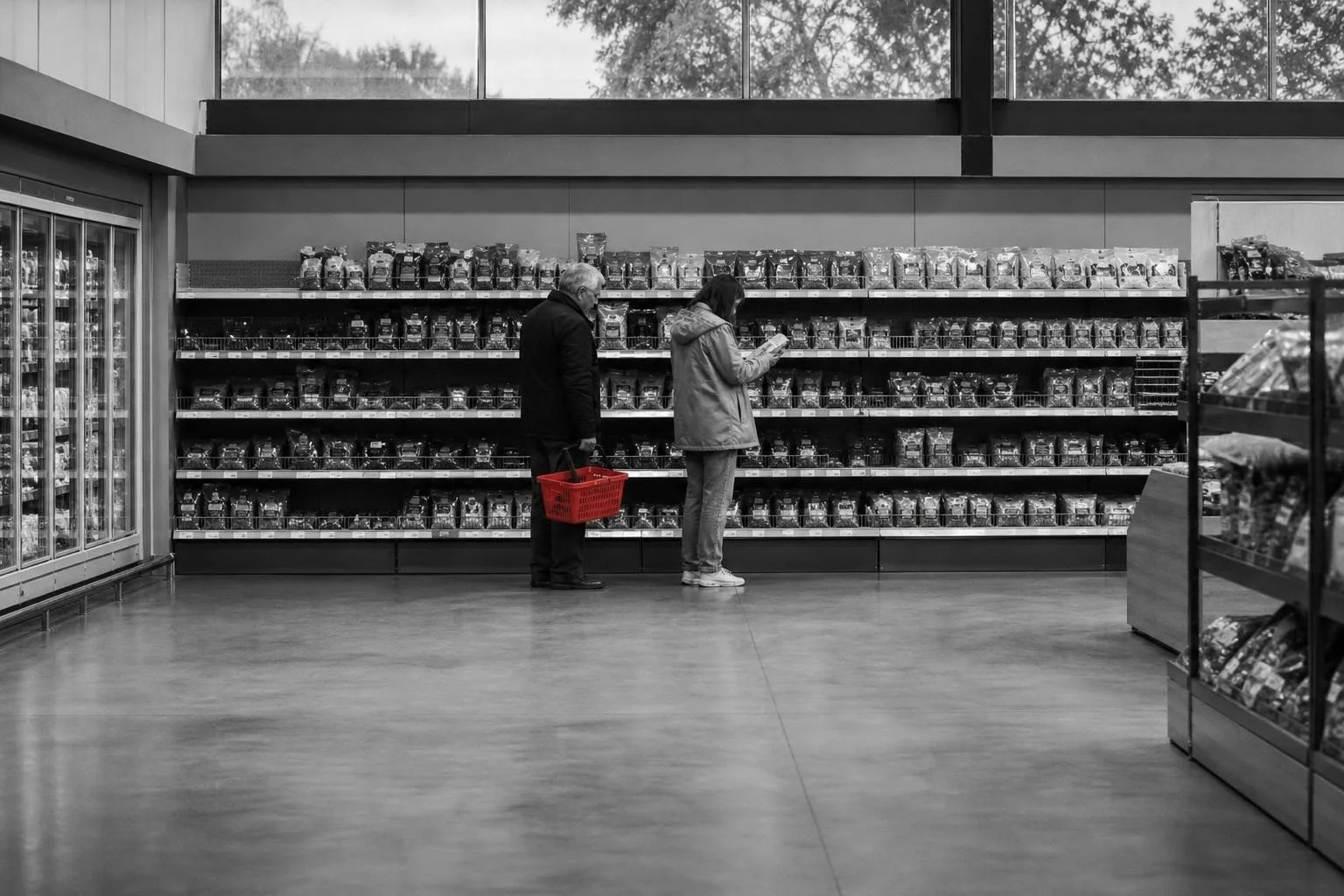
You are in the supermarket aisle with a basket in one hand and a phone in the other, and the packet in front of you says "wholesome" on the front. Few of us have time to investigate every product, so it is fair to ask whether a few seconds with the label makes any real difference.
What the study found
News-Medical reports on a cross-sectional study by researchers at the US Centers for Disease Control and Prevention (CDC). The paper is titled "Nutrition Label Use and Intake of Added Sugars in US Children and Adults" and was published in Nutrients.
The team used national survey data (NHANES, 2017–March 2020) covering 9,416 people: 6,457 adults and 2,959 children. Here is what stood out:
Adults who used labels frequently consumed an estimated 61.7 g of added sugar a day, compared with 104.4 g for infrequent users. That is a reported gap of 42.8 g a day.
Added sugars made up 11.7% of daily calories for frequent adult label users and 17.5% for infrequent users.
Among children, the reported difference was 14.5 g a day. Caregivers answered for children under 16, while older children answered for themselves.
One detail is easy to miss. "Frequent" users included people who checked labels "always," "most of the time," or "sometimes." Only "rarely" or "never" counted as infrequent. You do not have to read every label to be in the first group.
Why it matters for a busy reader
Most of us make food choices on autopilot, and a lot of that happens in the shop rather than at the table. What goes into the basket on Saturday shapes what is easy to grab on a Wednesday evening. A quick look at the label is one small, low-effort pause in that routine.
The gap in the study is large: more than 40 g a day between the two groups of adults, and a noticeably different share of daily calories. It is not a tip about willpower or perfection. It points to a habit that takes seconds and that you can do alongside everything else on your list.
It also fits a mindful approach to eating. Looking at a label is a moment of noticing what you are choosing, without judging yourself or the food.
How to try it
The study reports an association, not proof that reading labels lowers your intake. Treat this as a small experiment rather than a rule.
Pick one product type. Choose something you buy every week, such as cereal, yoghurt, a sauce or a drink.
Find the sugar information on the nutrition label, and compare two options side by side before choosing. US labels list "added sugars" separately. In the UK, Ireland and the EU, labels show total sugars ("of which sugars"), so also glance at the ingredients list: the nearer sugar or syrups are to the top, the more the product contains.
Note the serving size the label uses, so you are comparing like with like. Per 100 g figures make this easier where they are given.
Choose what suits you. Sometimes that will be the lower-sugar option, and sometimes it will be the one you simply enjoy. Both are fine.
Beginner option: do this for one item on your next shop. If it feels easy, add a second item the week after. That is still "sometimes" in the study's terms.
If you are building a basket around more whole foods, our guide to 8 Power Foods to Build More Muscle in 2026 is a handy starting list. For a seasonal idea, see Kale for Winter: What Dietitians Say About Immune Support.
One honest caveat
This was a cross-sectional, observational study, so it cannot show that checking labels caused the lower sugar intake. People who already prioritise healthier eating may be more likely to read labels, and the researchers note that socioeconomic differences could partly explain the link. Missing answers about label use also limit how far the results can be interpreted, and differences in label use by income and education need further investigation.
So a 43 g gap is not a promise of what you will see. It is a reason to try a simple habit and notice how it feels. If you have a health condition, or you are managing your diet for medical reasons, check with your doctor or a registered dietitian before changing how you eat.
Your next step
This week, pick one packaged food you buy regularly. Before it goes in the basket, check its sugar information and compare it with one alternative. That is the whole experiment.
Want a plan that fits a busy week? Get the free 3×30 Strength Week and join the Fitizens.
Sources: News-Medical, "A 43-gram sugar gap separates adults who check food labels from those who rarely do" (Hugo Francisco de Souza, reviewed by Susha Cheriyedath, M.Sc., 12 November 2026, updated 14 November 2026), reporting on a CDC study published in Nutrients.