Kale for Winter: What Dietitians Say About Immune Support
When the evenings draw in and everyone around you seems to be sniffling, it is natural to wonder whether your plate can help. The trouble is that immune advice often turns into a long list of supplements and powders that few of us have the time or budget for. A single, ordinary vegetable is a calmer place to start.
What the source found
In a piece for Real Simple, “The One Winter Vegetable Dietitians Say You Should Eat for a Stronger Immune System”, writer Christina Manian, RDN, asked three registered dietitians to name their top winter vegetable for immune health. All three chose kale.
Here is what they and the article highlighted:
Vitamins C and A. Anna Smith, MS, RDN, LDN, of Anna Smith Nutrition, says kale provides both, and that they support immunity.
Antioxidant vitamins. The article adds that kale contains vitamins K and E too. It describes vitamins A, C, K and E as antioxidants that help reduce inflammation and oxidative stress.
Protecting immune cells. Kristen Carli, MS, RD, CPT, of Camelback Nutrition & Wellness, says reducing oxidative stress helps prevent damage to immune cells.
Plant compounds. Kale also contains beta-carotene and polyphenols, including a flavonoid called kaempferol. Lainey Younkin, MS, RD, of Lainey Younkin Nutrition, says kaempferol supports immune health through effects on T cells, the gut microbiome and free radicals.
It is worth being clear about what this is. The article reports expert commentary. It does not point to a specific study, so it cannot tell us how much difference kale makes to how often you get ill.
Why it matters for a busy reader
Our take is simple: kale makes a good winter anchor. It is not a cure or a shield, and no single food is. But a vegetable that three dietitians independently reached for is a reasonable, low-effort choice when you want your winter eating to lean towards nutrient-rich plants.
That framing helps in practice. Most of us do better with one small, repeatable habit than with an overhaul. “Add some kale to something I am already cooking” is a far easier promise to keep than a new supplement routine, and it carries no sense of pass or fail. If you eat it twice one week and not at all the next, that is still progress.
The article also names close runners-up: pumpkin, winter squash and sweet potatoes. Their beta-carotene can be converted by the body into vitamin A. So if kale is not for you, you have other seasonal options, which keeps the habit flexible rather than rigid.
How to try it
The article does not prescribe an amount or a way of preparing kale, so there is no right or wrong here. Treat these as ideas for fitting it into a normal week:
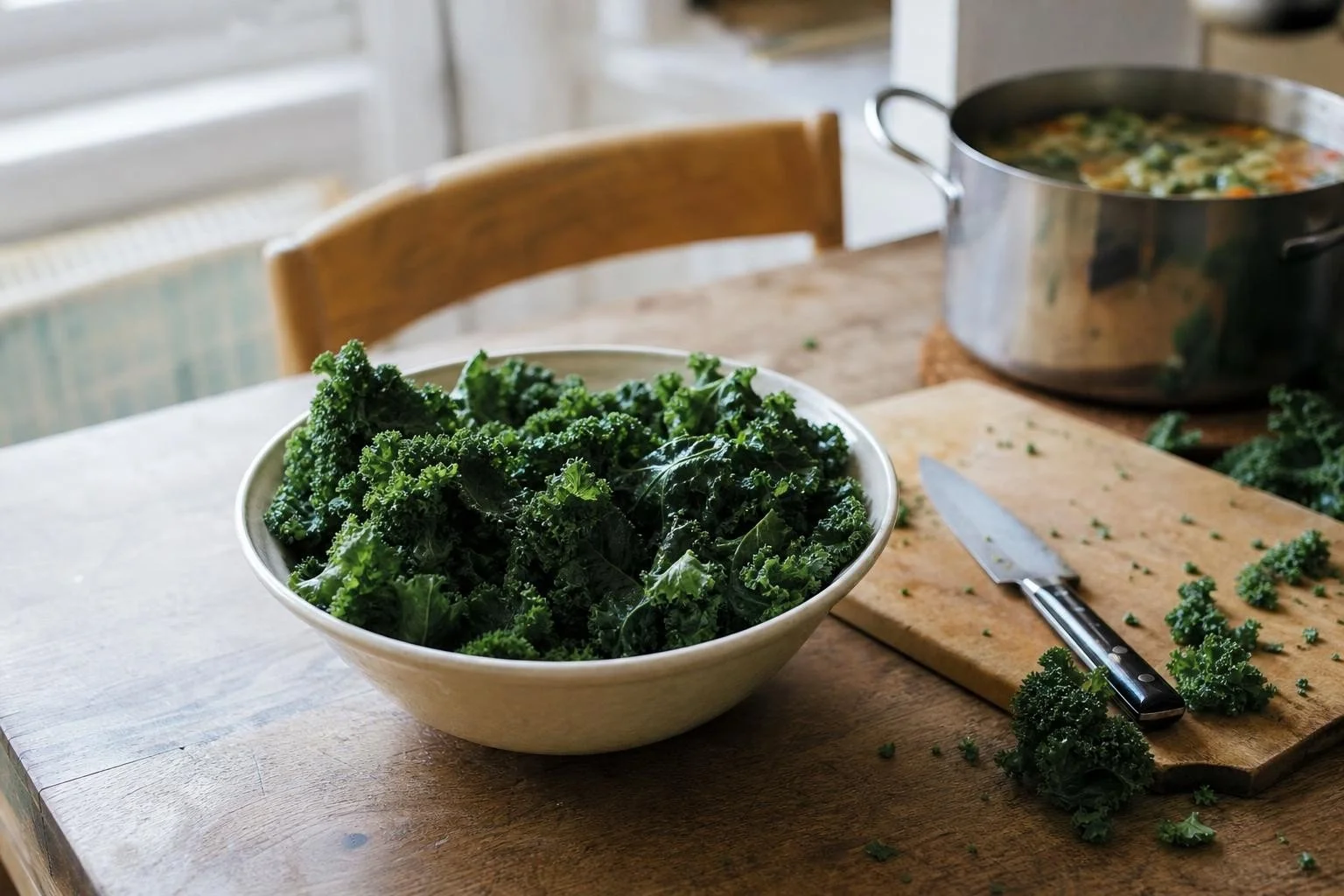
Beginner option: stir a handful of chopped kale into a soup, stew or pasta sauce you already make, near the end of cooking. You will barely change the meal, and it is an easy way to find out whether you like it.
Add it to eggs or grain bowls: a few chopped leaves wilted into scrambled eggs or stirred through rice or couscous works well.
Make it a side: cook it briefly in a pan with a little oil and garlic alongside whatever protein you are having.
Batch it: if you cook in bulk on Sundays, chop a bag of kale at the same time and add it to two or three meals through the week.
Swap when you need to: if kale is not appealing, roast some pumpkin, winter squash or sweet potato instead.
Pick one of these and try it this week. If you do not enjoy it the first time, try a different method before ruling it out, or move to one of the alternatives.
One honest caveat
The evidence behind this advice is expert opinion, not a trial we can weigh up. The article gives no serving target, dose or duration for eating kale, and no study details to show how much it affects immune outcomes. It also does not say who might need to avoid kale or find it unsuitable.
So keep expectations modest. Kale is a useful part of a varied winter diet, alongside sleep, movement and the other basics, rather than a guarantee of staying well. If you have a health condition, take medication or have been given specific dietary advice, check with your GP or a registered dietitian before making changes.
Your next step
This week, add kale to one meal you were already planning to cook. Soup, pasta sauce or eggs are good places to start. Notice how it tastes and how easy it was, and decide from there whether it earns a regular slot. If you would like more practical, no-pressure ideas like this, join Fitizens, our free email community.
Sources: Christina Manian, RDN, Real Simple, “The One Winter Vegetable Dietitians Say You Should Eat for a Stronger Immune System”, published 7 November 2026 (updated 8 November 2026).