150 Minutes a Week: Your Exercise Minimum
How Much Exercise Do You *Actually* Need Each Week? The Science-Backed Answer
Let's be honest—fitness advice can feel overwhelming.
One expert says you need to hit the gym six days a week. Another swears by daily 5 AM runs. Your neighbor claims they transformed their body with just 10 minutes a day. Meanwhile, you're wondering if chasing your kids around the house counts as cardio.
So what's the truth? How much exercise do you actually need to stay healthy, manage your weight, and reduce your risk of chronic disease?
I dug into the latest recommendations from leading health authorities, and the answer might surprise you—it's probably more achievable than you think.
---
The Magic Number: 150 Minutes Per Week
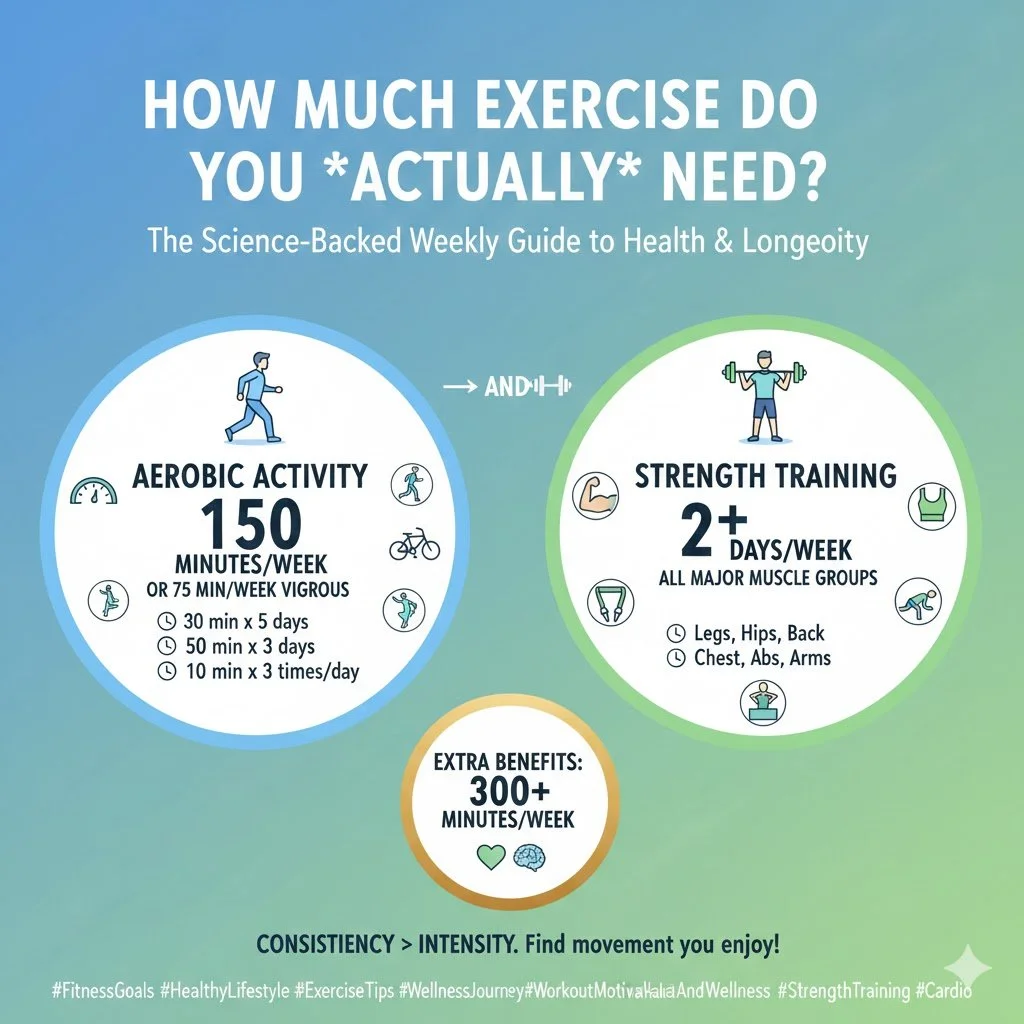
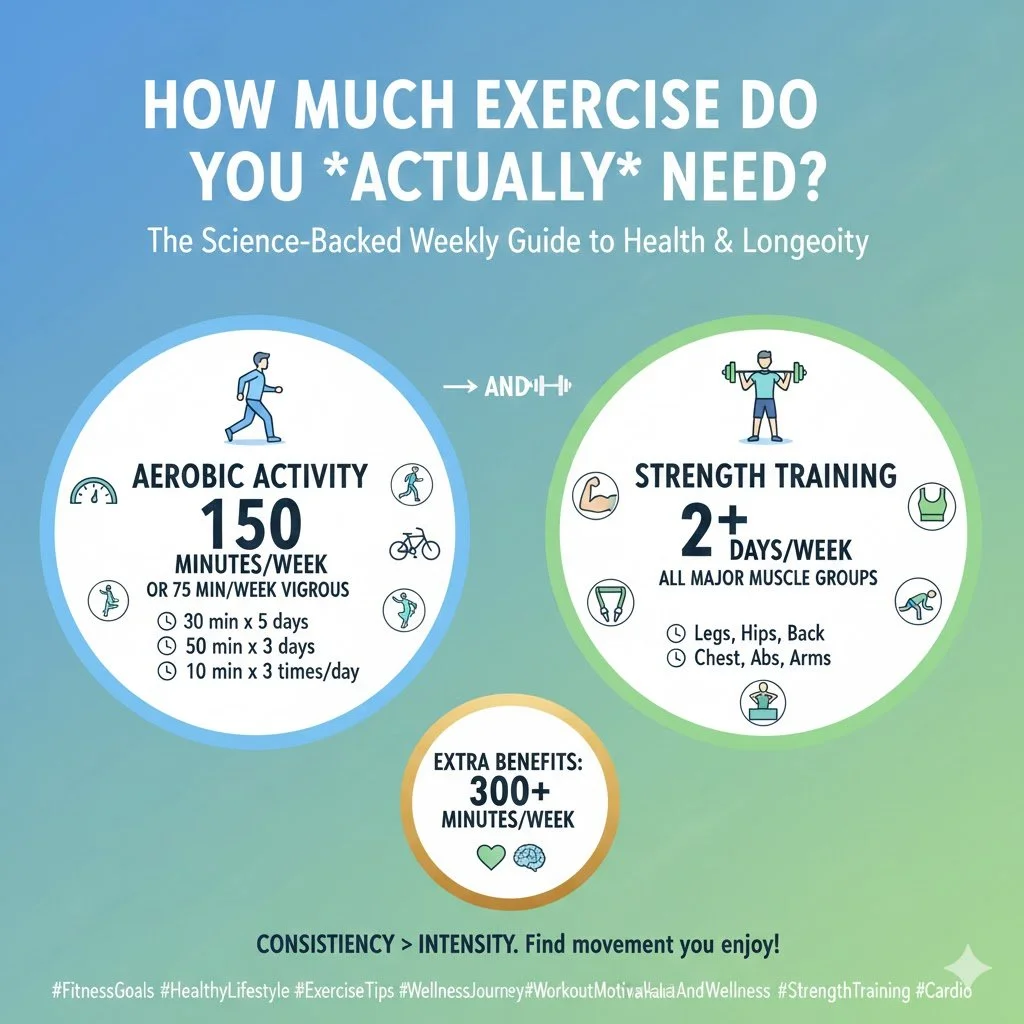
According to current health guidelines, adults should aim for at least 150 minutes per week of moderate-intensity aerobic activity. That's activities like brisk walking, dancing, cycling, or even vigorous gardening.
Prefer to push harder? You can swap that for 75 minutes per week of vigorous-intensity exercise—think running, swimming laps, or high-intensity interval training.
Here's what I love about this: 150 minutes sounds like a lot until you break it down.
- 30 minutes, five days a week
- 50 minutes, three days a week
- Three 10-minute walks throughout your day
Suddenly, that "overwhelming" recommendation feels pretty doable, right?
---
Don't Forget About Strength Training
Cardio gets all the attention, but strength training is non-negotiable for long-term health.
The recommendation? Muscle-strengthening activities on at least two days per week, targeting all major muscle groups—legs, hips, back, chest, abdomen, shoulders, and arms.
This doesn't mean you need a gym membership or expensive equipment. Bodyweight exercises like squats, push-ups, and planks absolutely count. So do resistance bands, dumbbells at home, or even carrying heavy grocery bags up three flights of stairs (we've all been there).
Strength training isn't just about building muscle—it supports bone density, improves balance, boosts metabolism, and becomes increasingly important as we age.
---
Want Extra Benefits? Aim Higher
While 150 minutes is the baseline, research suggests that 300 minutes or more per week of moderate aerobic activity provides additional health benefits.
Before you panic—this isn't about perfection. It's about understanding that movement exists on a spectrum. More movement generally equals more benefits, but any movement is better than none.
If you're currently sedentary, don't leap to 300 minutes overnight. Start where you are. Add five minutes to your daily walk. Take the stairs once a day. Build gradually.
Progress over perfection, always.
---
Why This Matters More Than You Think
Regular physical activity isn't just about fitting into your favorite jeans (though that's a nice bonus). The health benefits are profound and well-documented:
- Reduced risk of heart disease—the leading cause of death globally
- Lower risk of type 2 diabetes—increasingly common in modern lifestyles
- Better weight management—exercise helps regulate appetite and metabolism
- Improved mental health—movement is one of the most effective natural mood boosters
- Increased longevity—active people simply live longer, healthier lives
When you frame exercise as an investment in your future self—your energy levels, your independence, your quality of life—those 30 minutes suddenly feel less like a chore and more like a gift.
---
The Real Secret: Consistency Over Intensity
Here's what the fitness industry doesn't always tell you: the best workout is the one you'll actually do.
Spread your exercise throughout the week rather than cramming it into marathon weekend sessions. Your body responds better to regular, consistent movement than sporadic intense efforts followed by days of inactivity.
Find activities you genuinely enjoy. Hate running? Don't run. Love dancing? Dance. Prefer walking while listening to podcasts? Perfect. The goal is sustainable movement that fits your life.
---
Your Move
So here's my challenge to you this week: audit your current activity level. How many minutes are you actually moving? Not what you think you're doing—what you're actually doing.
Then pick one small way to add more movement. Just one. A 10-minute walk after dinner. A quick strength routine before your morning shower. Dancing in your kitchen while cooking.
Small changes, stacked consistently, create remarkable results.
---
I'd love to hear from you: What's your biggest barrier to getting enough exercise each week? Is it time, motivation, energy, or something else entirely? Drop your thoughts in the comments below—let's problem-solve together.
If this post resonated with you, share it with someone who might need a realistic reminder that fitness doesn't have to be complicated.