Mix It Up: Exercise Variety Cuts Death Risk 19%

Why Mixing Up Your Workouts Could Add Years to Your Life
New research reveals that variety isn't just the spice of life—it might actually help you live longer.
---
If you've been loyal to your morning jog or devoted to your weight routine, I have some news that might change how you think about exercise. A groundbreaking study tracking over 110,000 American adults for decades has uncovered something fitness enthusiasts and casual exercisers alike need to hear: the secret to a longer life isn't just moving more—it's moving differently.
The Study That's Changing the Conversation
Researchers examined decades of health data and discovered that participants who engaged in the widest variety of physical activities—think walking and lifting weights and practicing yoga and gardening—experienced up to 19% lower risk of dying early compared to those who stuck with just one type of exercise, even when total exercise time was similar.
Let that sink in. Same amount of effort, dramatically different outcomes.
The benefits extended across multiple health markers:
- 13-41% reduced risk of death from heart disease
- Significant protection against cancer-related mortality
- Lower rates of respiratory illness complications
Why Variety Works: The Science of Complementary Movement
Our bodies are complex systems, and different activities target different needs. Here's how diversifying your routine creates a comprehensive health shield:
Aerobic exercise (walking, cycling, swimming) strengthens your cardiovascular system and improves endurance.
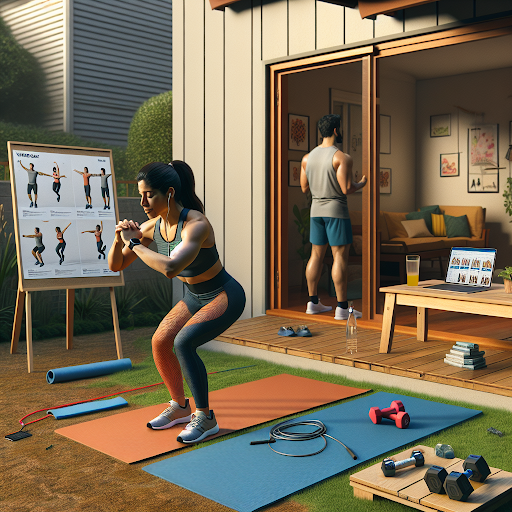
Strength training (weights, resistance bands, bodyweight exercises) builds muscle mass and maintains bone density—crucial factors as we age.
Balance and flexibility work (yoga, tai chi, stretching) enhances mobility, improves coordination, and significantly reduces fall risk.
When you combine these modalities, the benefits don't just add up—they multiply.
Dr. Yang Hu, one of the researchers involved in this work, emphasizes that while total activity remains important, diversifying your movement patterns creates "additive health effects" that single-activity routines simply can't match.
The Hidden Benefit: You'll Actually Stick With It
Here's something the researchers noted that resonates with anyone who's ever abandoned a fitness routine: variety fights boredom.
When your only option is the treadmill, motivation becomes a constant battle. But when Tuesday means a yoga class, Thursday brings a nature walk, and Saturday involves some gardening and light weights, exercise transforms from a chore into an exploration. You're more likely to stay consistent over months and years—and consistency is where the real magic happens.
What This Means for Your Weekly Routine
Current guidelines recommend 150 minutes of moderate activity or 75 minutes of vigorous activity weekly. But this research suggests that how you structure those minutes matters as much as hitting the target.
A sample week might look like:
- Monday: 30-minute brisk walk
- Tuesday: 20 minutes of light weights or resistance training
- Wednesday: Yoga or stretching session
- Thursday: Swimming or cycling
- Friday: Active recovery—gardening, yard work, or a leisurely stroll
- Weekend: Mix and match based on what sounds enjoyable
The beauty of this approach? It scales across every life stage. For younger adults, variety helps prevent overuse injuries. For older adults, it supports independence and functional mobility well into later years.
A Note on the Research
As with any study, there are limitations worth acknowledging. The data was self-reported, and the sample skewed toward white professionals, meaning results may vary across different populations. However, the size and duration of the study make its core findings compelling.
The Bottom Line
You don't need to become a triathlete or overhaul your entire life. You just need to embrace a bit more variety in how you move. Take your usual walk, then add a short strength session. Try a yoga video on YouTube. Pull some weeds in the garden. Dance in your kitchen.
Your body will thank you—possibly with extra years to enjoy.
---
I'd love to hear from you: What activities are already part of your routine, and what's one new movement you might add this week? Drop your thoughts in the comments below, and if this resonated with you, share it with someone who might need a nudge to mix things up.