Can Eating Carbs Last Curb Blood Sugar Spikes?
The Simple Eating Hack That Could Change How Your Body Handles Meals
What if the secret to steadier energy and fewer afternoon crashes wasn't about *what* you eat—but *when* you eat it during your meal?
I stumbled across this concept a few months ago while researching ways to feel more balanced after meals. You know that heavy, sluggish feeling after lunch? The one that makes you want to close your eyes at your desk around 2 PM? I was convinced it was just a normal part of eating.
Turns out, it might not be.
---
Enter Food Sequencing
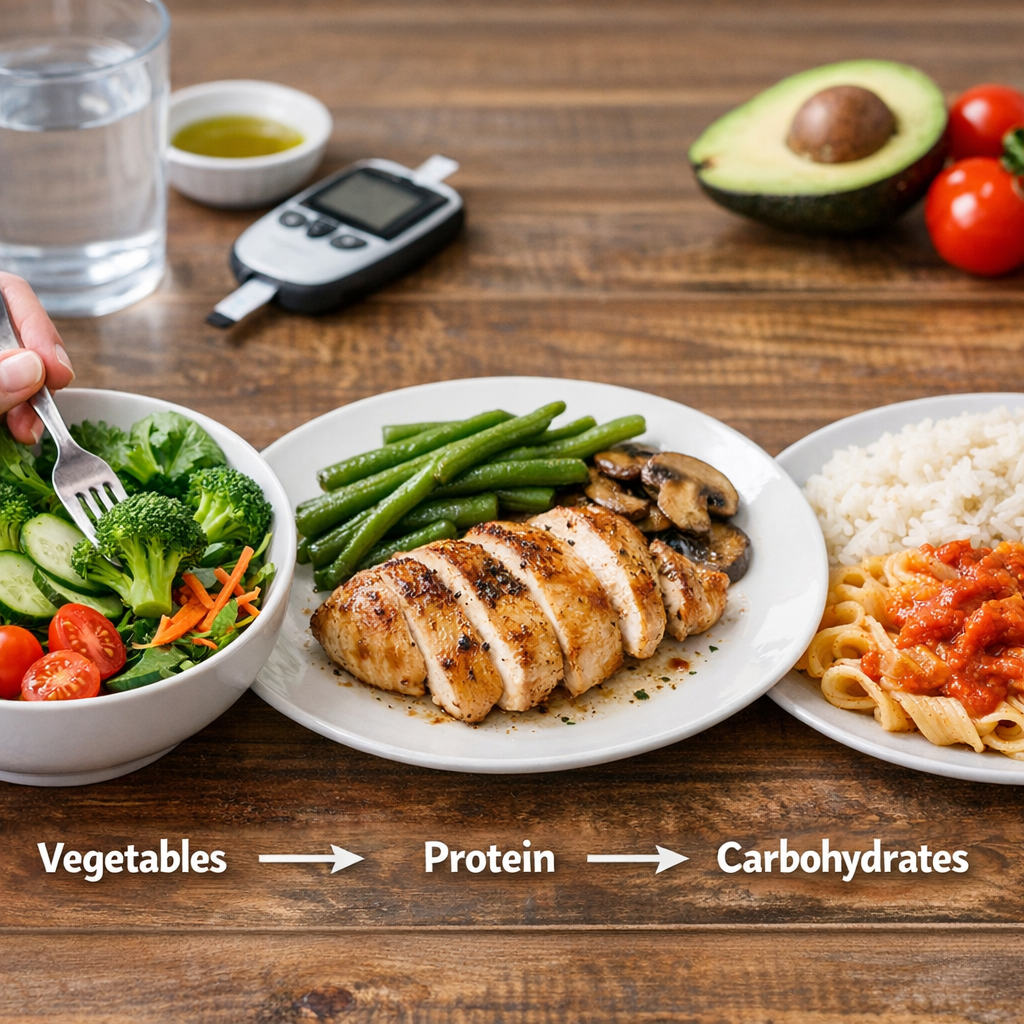
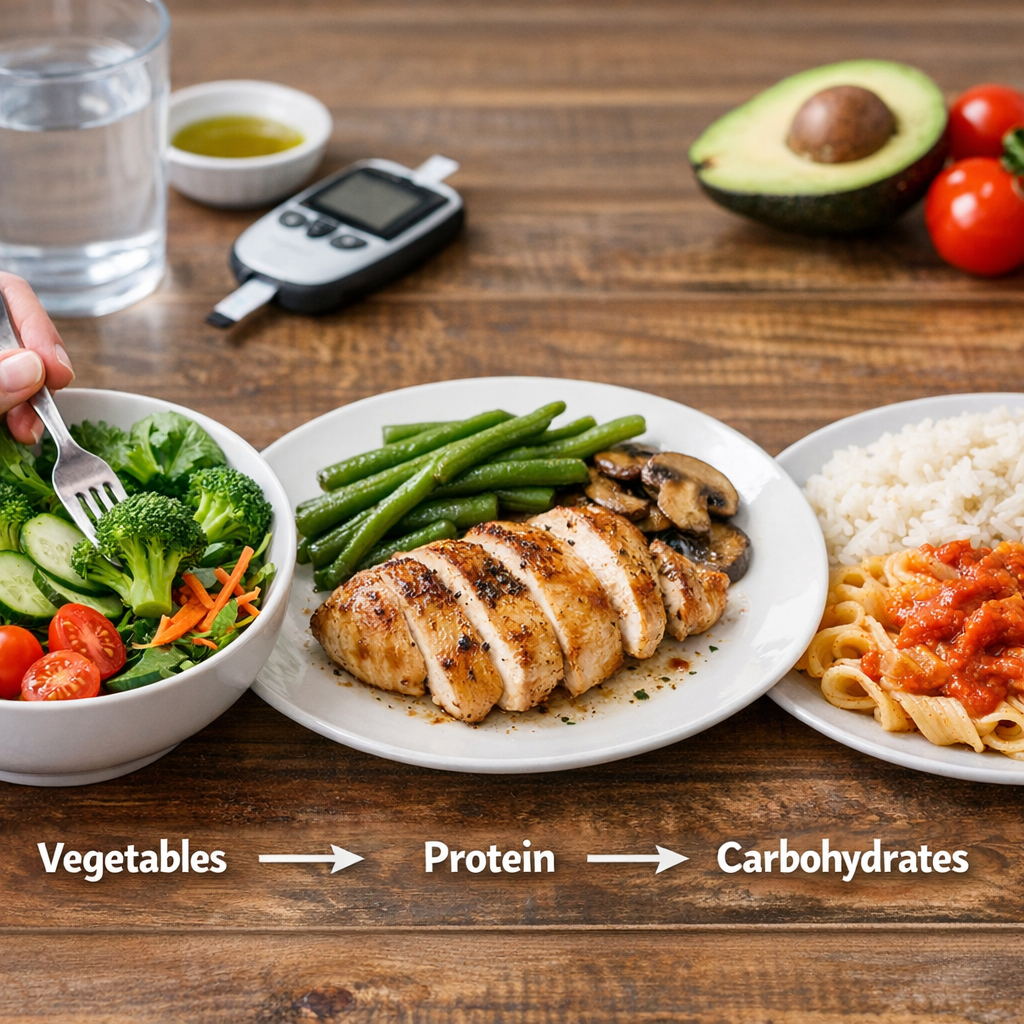
Food sequencing—sometimes called meal sequencing or carbohydrate-last eating—is exactly what it sounds like: eating the components of your meal in a specific order rather than taking random bites of everything on your plate.
The sequence is simple:
1. Non-starchy vegetables first
(Think leafy greens, broccoli, peppers, cucumbers)
2. Protein and fats second
(Chicken, fish, eggs, cheese, avocado)
3. Carbohydrates last
(Rice, bread, pasta, potatoes)
That's it. No calorie counting. No eliminating food groups. No complicated rules to memorize.
---
Why Does the Order Matter?
Here's where it gets interesting.
When you eat vegetables first, the fiber creates a kind of "buffer" in your digestive system. It slows down how quickly everything else—especially carbohydrates—gets absorbed into your bloodstream.
Following up with protein and fats continues this slowing effect. By the time you get to the carbohydrates, your body is primed to handle them more gradually.
The result? Smaller blood sugar spikes after meals.
For most people, this translates to:
- More stable energy levels
- Reduced post-meal fatigue
- Feeling satisfied longer
- Fewer intense cravings an hour after eating
---
Who Benefits Most?
While anyone can experiment with food sequencing, research suggests it may be particularly valuable for:
- People managing Type 2 diabetes
- Those with prediabetes
- Women experiencing gestational diabetes
- Anyone who notices energy crashes after carb-heavy meals
For these groups, smoothing out post-meal glucose responses isn't just about comfort—it's a meaningful part of managing their health.
But even if you don't fall into these categories, the approach offers a low-stakes way to potentially feel better after eating.
---
What I Love About This Approach
In a world of restrictive diets and complicated nutrition protocols, food sequencing stands out for what it doesn't ask you to do.
You don't have to:
- Give up your favorite foods
- Track macros or calories
- Buy special ingredients
- Follow a strict meal plan
You simply:
- Rearrange your plate
- Eat mindfully
- Notice how you feel
It's the kind of habit that feels almost too simple to work—which is probably why it's so sustainable for most people who try it.
---
How to Start Today
Next time you sit down to a meal, try this:
1. Look at your plate. Identify the vegetables, the protein, and the carbs.
2. Start with the vegetables. Finish them (or most of them) before moving on.
3. Move to your protein. Take your time here.
4. End with carbohydrates. By now, you might find you're more satisfied and eat less of them naturally.
5. Pay attention. How do you feel 30 minutes after the meal? An hour? Two hours?
Give it a week and see what you notice. The best part? If it doesn't work for you, you've lost nothing. You've simply eaten the same foods in a different order.
---
The Bigger Picture
Food sequencing isn't magic, and it won't fix everything. But it represents something I think we need more of in the wellness space: small, sustainable changes that work with your life rather than against it.
Not every health improvement requires a complete lifestyle overhaul. Sometimes, it's just about eating your salad before your pasta.
---
I'd love to hear from you: Have you tried food sequencing before? Did you notice any difference in how you felt after meals? Drop a comment below and let's talk about it—and if this resonated with you, share it with someone who might benefit from a simpler approach to feeling better after eating.