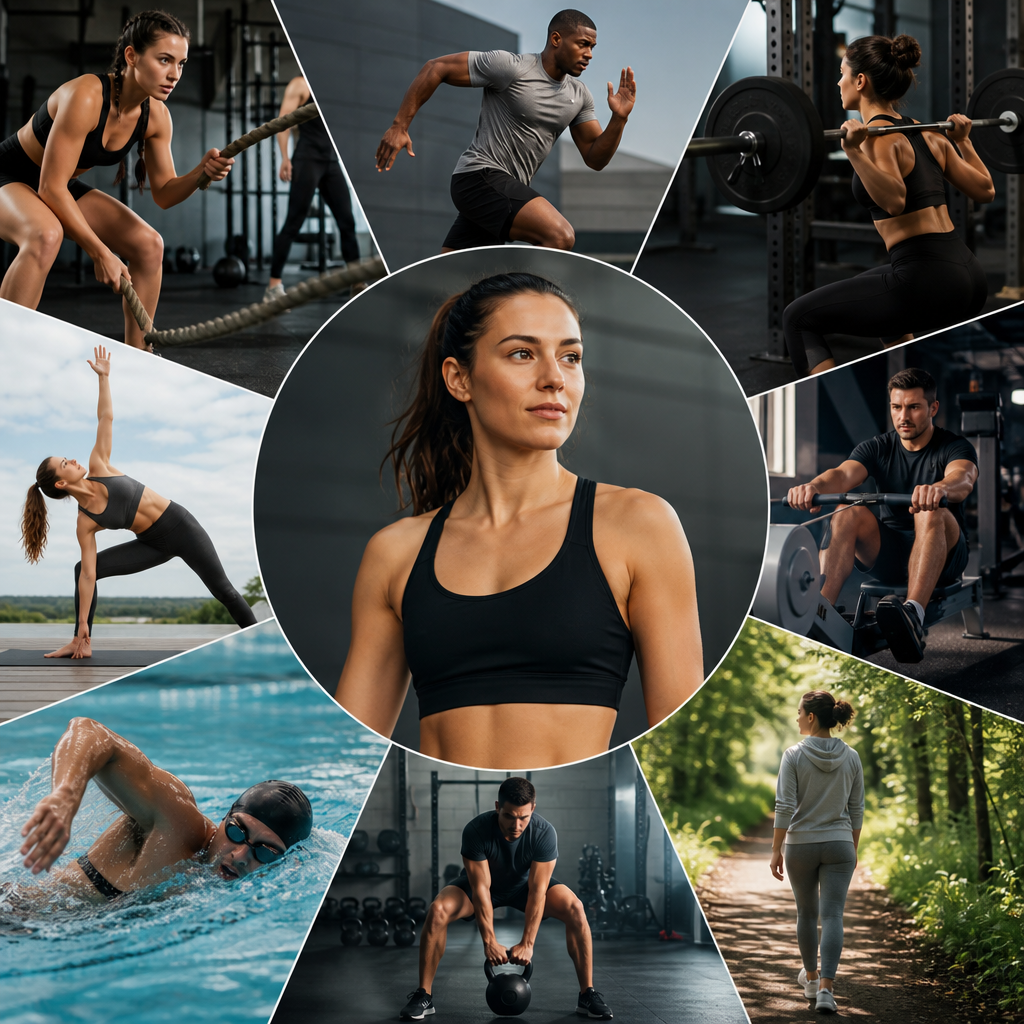
HIIT, HYROX or LISS: Which Workout Fits You?
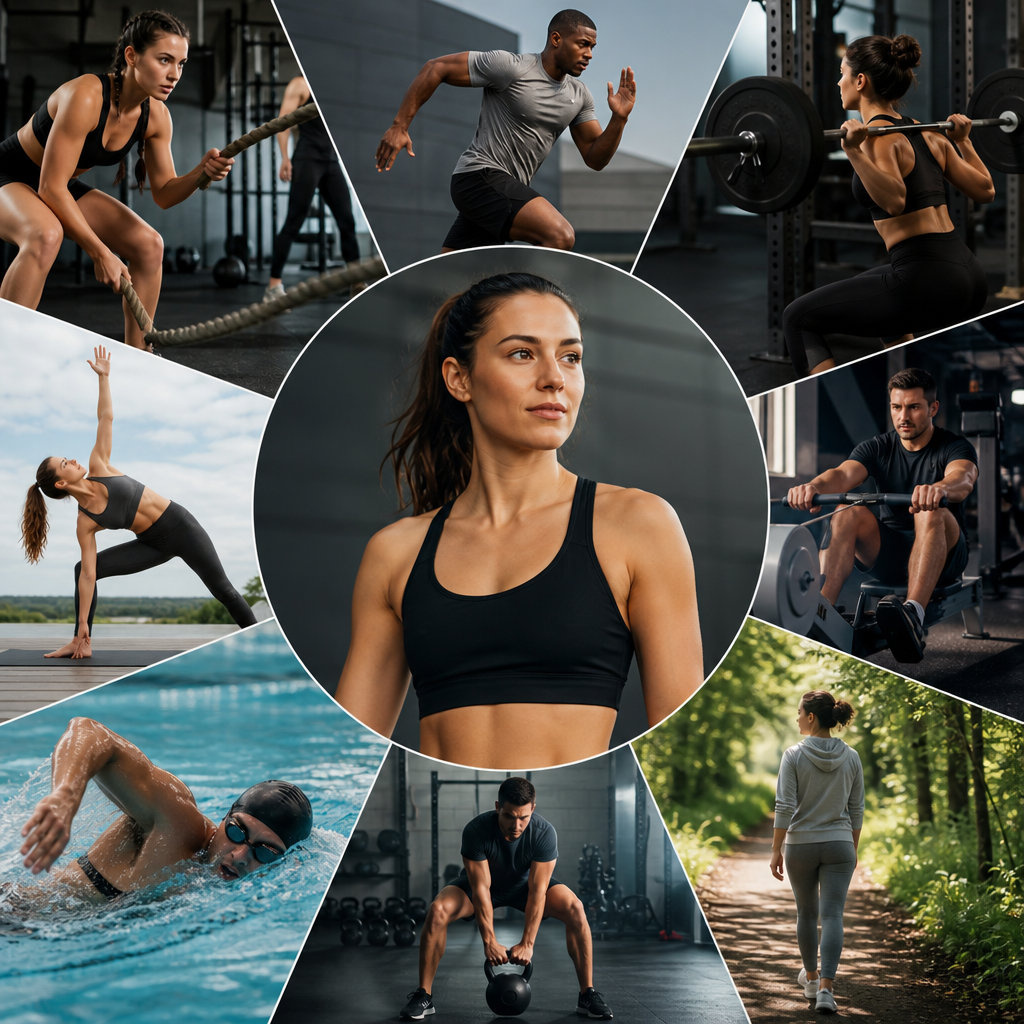
Finding Your Fit: A Guide to 10 Popular Training Styles (And How to Choose the Right One for You)
If you've ever scrolled through social media and felt overwhelmed by the sheer number of workout styles being touted as "the best," you're not alone. From HYROX competitions flooding your feed to debates about whether HIIT or steady-state cardio reigns supreme, the fitness world can feel like a maze of acronyms and conflicting advice.
Here's the truth: there is no single best training method. The right approach depends entirely on your goals, preferences, and what actually gets you excited to move your body.
Let's break down 10 popular training styles, explore what makes each one unique, and help you find the approach—or combination of approaches—that works for you.
---
High-Intensity Training Styles
1. HIIT (High-Intensity Interval Training)
What it is: Short bursts of all-out effort followed by brief rest periods, typically lasting 20-40 minutes.
Best for: Those short on time who want maximum calorie burn and cardiovascular improvements. HIIT elevates your heart rate quickly and keeps your metabolism revving long after the workout ends.
Consider this if: You thrive on intensity and want efficient workouts that challenge both your aerobic and anaerobic systems.
2. HYROX
What it is: A fitness racing concept combining running with functional workout stations. Participants complete eight 1km runs, each followed by a different exercise (rowing, sled push, burpee broad jumps, and more).
Best for: Competitive spirits who want a concrete goal to train toward. HYROX has exploded in popularity because it gives everyday athletes a measurable event to prepare for.
Consider this if: You love the idea of race day motivation but find traditional running events monotonous.
3. CrossFit
What it is: Constantly varied functional movements performed at high intensity, often in a group setting. Workouts (called WODs) combine elements of weightlifting, gymnastics, and cardio.
Best for: People who thrive in community environments and want to build well-rounded fitness across multiple domains.
Consider this if: You're motivated by competition, enjoy learning new skills, and want workouts that rarely feel repetitive.
4. Circuit Training
What it is: A series of exercises performed back-to-back with minimal rest, targeting different muscle groups in rotation.
Best for: Building muscular endurance while keeping your heart rate elevated. It's incredibly versatile and can be adapted for any fitness level.
Consider this if: You get bored easily and prefer variety within a single session.
5. Tabata
What it is: A specific HIIT protocol consisting of 20 seconds of maximum effort followed by 10 seconds of rest, repeated for 4 minutes total.
Best for: Those who want a science-backed, time-efficient workout. Research shows this protocol significantly improves both aerobic and anaerobic capacity.
Consider this if: You have limited time but unlimited determination—four minutes of true Tabata is no joke.
---
Lower-Intensity and Steady-State Training Styles
6. LISS (Low-Intensity Steady State)
What it is: Sustained cardiovascular exercise performed at a consistent, moderate pace—think walking, easy cycling, or swimming at a comfortable speed.
Best for: Recovery days, building aerobic base, and those who find high-intensity work too stressful on the body or mind.
Consider this if: You want to improve endurance without the burnout, or you're looking for movement that allows you to hold a conversation (or listen to a podcast).
7. Zone 2 Training
What it is: Cardio performed at an intensity where you can still speak in full sentences, typically 60-70% of your maximum heart rate.
Best for: Building mitochondrial density and fat-burning efficiency. Many elite endurance athletes spend 80% of their training time in this zone.
Consider this if: You're playing the long game with your fitness and want sustainable cardiovascular health.
8. Yoga
What it is: A practice combining physical postures, breathing techniques, and meditation, with styles ranging from gentle (restorative) to physically demanding (power yoga, Ashtanga).
Best for: Improving flexibility, body awareness, and mental clarity. It's also excellent for stress management and recovery.
Consider this if: You want to balance out more intense training or cultivate a stronger mind-body connection.
---
Strength-Focused Training Styles
9. Traditional Strength Training
What it is: Resistance exercises performed with weights or bodyweight, typically with longer rest periods between sets to allow for maximum effort.
Best for: Building muscle mass, increasing bone density, and developing raw strength.
Consider this if: You have specific aesthetic or strength goals and enjoy the meditative quality of focused lifting.
10. Functional Training
What it is: Exercises that mimic everyday movements—squatting, pushing, pulling, rotating—designed to improve how your body performs in real life.
Best for: Enhancing movement quality, preventing injury, and building practical strength that translates beyond the gym.
Consider this if: You want to feel stronger in daily activities, from carrying groceries to playing with your kids.
---
So, How Do You Choose?
Here's where it gets interesting: you don't have to pick just one.
The most sustainable fitness routines often blend multiple training styles. You might combine Zone 2 cardio with strength training during the week, add a HIIT session for metabolic conditioning, and practice yoga for recovery. The key is finding a mix that:
1. Aligns with your goals – Want to run a faster 5K? Prioritize running and HIIT. Want to build muscle? Focus on strength training with LISS for recovery.
2. Matches your preferences – If you dread every workout, you won't stick with it. Enjoyment matters more than optimization.
3. Fits your lifestyle – A parent with limited time might gravitate toward efficient HIIT sessions, while someone with flexible schedules might enjoy longer Zone 2 walks.
4. Allows for recovery – More isn't always better. Balancing intensity with lower-impact movement prevents burnout and injury.
---
The Bottom Line
Fitness isn't one-size-fits-all. The "best" workout is the one you'll actually do consistently—and ideally, the one that brings you some measure of joy.
Don't be afraid to experiment. Try a HYROX class. Go for a long, easy walk without tracking your pace. Pick up heavier weights. Roll out a yoga mat. Your ideal training style might be something you haven't discovered yet.
What training style are you most curious to try? Or if you've found your perfect fit, what made it click for you? Drop a comment below—I'd love to hear what's working in your fitness journey.