Train Like a Tactical Athlete After 30
Why Men Over 30 Need to Train Like Tactical Athletes
There's a conversation happening in gyms, physical therapy offices, and group chats across the country—and it usually starts the same way:
"I just can't do what I used to do."
Maybe it's the tight back that greets you every morning after a day at your desk. Maybe it's the knee pain that flares up two miles into a run. Or perhaps it's that split-second hesitation before you sprint after your kid in the backyard—a mental calculation you never used to make.
Here's the uncomfortable truth: the problem isn't that you're getting older. It's that you stopped training like an athlete.
According to former Green Beret and strength coach Jon Hamilton, this is the most common mistake men make as they enter their 30s and 40s. They either cling to the same workout routines from their twenties—high volume, minimal recovery, no intentional programming—or they swing to the opposite extreme, abandoning intensity altogether for casual jogs and the occasional spin class.
Neither approach works. What does? Training like a tactical athlete.
---
What Does "Training Like a Tactical Athlete" Actually Mean?
Tactical athletes—military operators, firefighters, law enforcement—don't have the luxury of being one-dimensional. They need to sprint, carry heavy loads, climb obstacles, maintain endurance under stress, and recover quickly. Their training reflects this demand.
For men navigating the physical realities of their 30s and 40s, this framework isn't just relevant—it's essential. Your body is changing. Your recovery is different. But your capacity for performance doesn't have to disappear. It just requires intention.
---
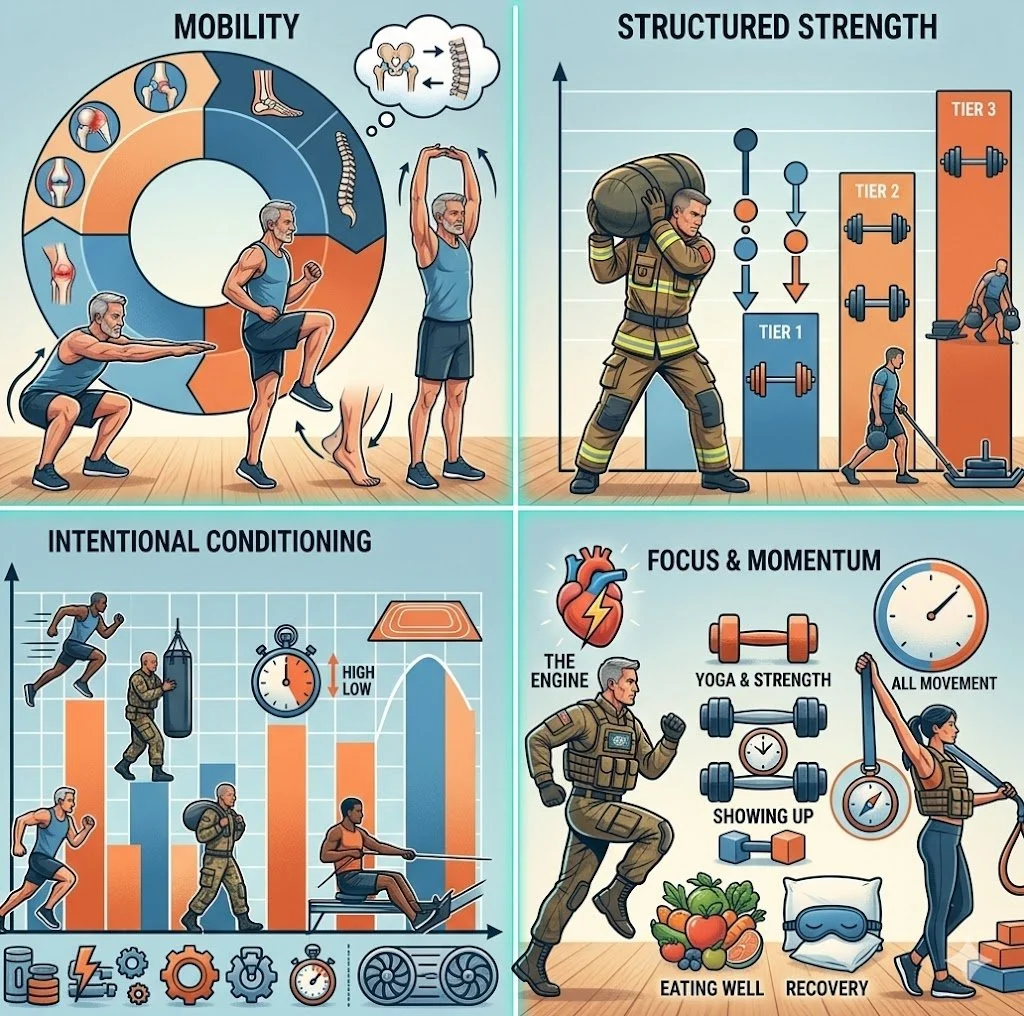
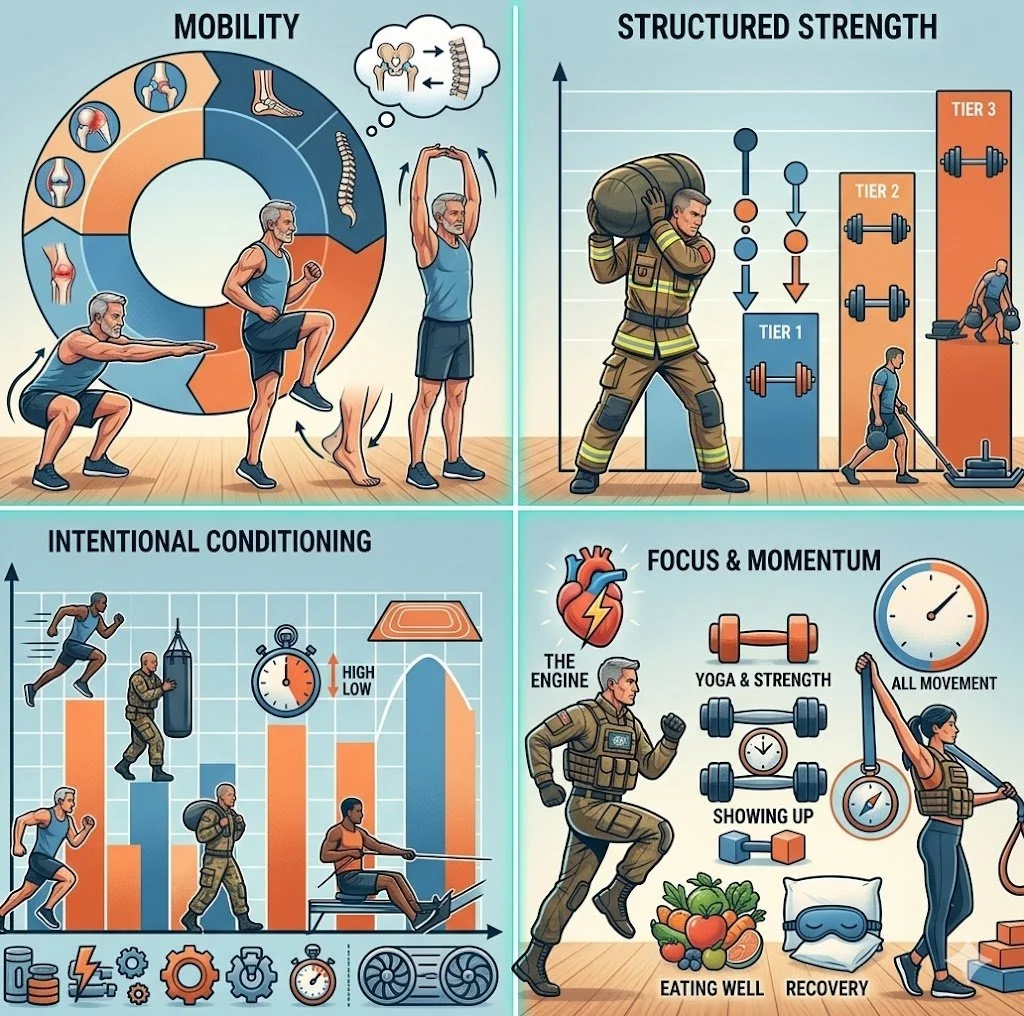
The Three Pillars of Athletic Training After 30
1. Mobility is Non-Negotiable
Forget hour-long yoga sessions or elaborate stretching routines you'll never maintain. Functional mobility means something much more specific: hips that extend, ankles that flex, and shoulders that reach overhead without compensation or pain.
This isn't about flexibility for its own sake. It's about restoring the movement capacity that allows you to sprint without pulling a hamstring, squat without knee pain, and throw a ball without shoulder impingement.
Think of mobility as the foundation. Without it, every other aspect of your training is built on unstable ground.
2. Strength Training Must Be Structured
You can still lift heavy. You should still lift heavy. But the "chest day, back day, arm day" approach of your twenties needs an upgrade.
Hamilton's approach is elegant in its simplicity: one main compound lift per session, followed by two or three targeted accessory movements. Sessions finish with carries, sled work, or general physical preparedness (GPP) exercises.
This structure accomplishes multiple goals simultaneously. You build and maintain strength through compound movements. You address weak links with accessories. And you develop the work capacity that keeps you resilient through carries and GPP work.
3. Conditioning Requires Intentional Design
This is where most men fail completely.
The casual weekend jog? It's not enough. The random HIIT workout you found on YouTube? It's missing the point.
Tactical conditioning is varied and intentional: short sprints that develop power and speed, loaded carries that build functional strength, intervals that push your anaerobic threshold, longer aerobic sessions that build your base, and GPP work like sled pushes and pulls that tie everything together.
The goal is to build what Hamilton calls an "engine"—a cardiovascular system that performs under stress, not just during comfortable, predictable workouts.
---
The Bottom Line: Intention Over Complexity
Here's what's encouraging about Hamilton's approach: this isn't complicated. It doesn't require expensive equipment, elaborate periodization schemes, or hours in the gym.
It requires intention.
Move well. Lift well. Stay explosive. Train your cardiovascular capacity with variety and purpose. Eat properly. Show up consistently.
That's it. That's the formula.
The men who thrive physically in their 30s, 40s, and beyond aren't genetic outliers or fitness obsessives. They're the ones who recognized that their training needed to evolve—and then made that evolution happen.
---
Your Move
The question isn't whether your body has changed. It has. The question is whether your training has changed with it.
Take an honest inventory: When was the last time you sprinted at full effort? Can you touch your toes without warming up? Does the thought of carrying something heavy up a flight of stairs fill you with confidence or dread?
What's one aspect of your training that needs to evolve? Drop your answer in the comments—I'd love to hear where you're starting.